
Nearly two decades ago, MediaFirst encouraged companies to optimize press releases for search engines. At the time, the goal was simple: use the right keywords, add links, and make it easier for Google and other search engines to find the news.
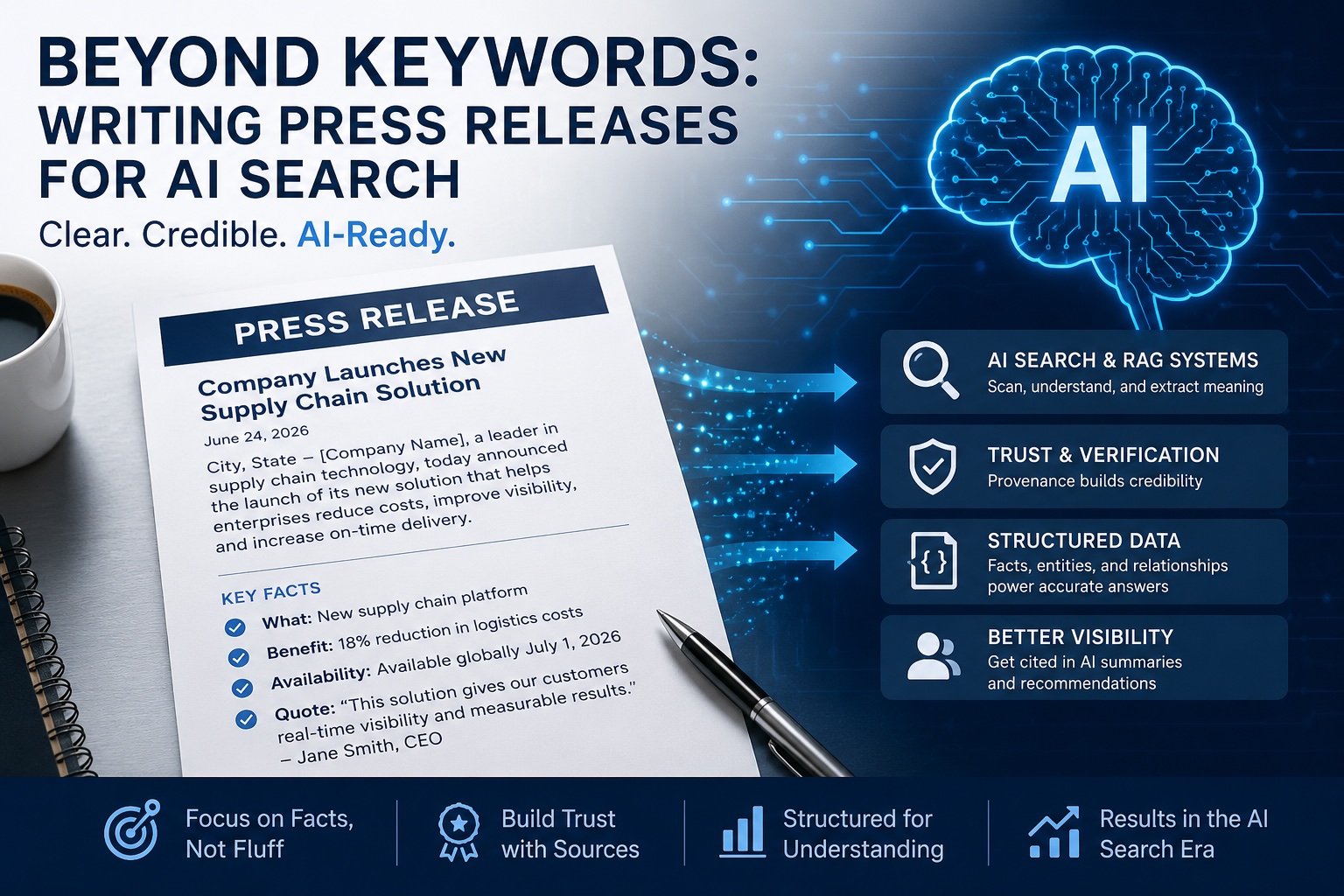
In 2026, keywords still matter, but they are no longer enough. Press releases are now being read not only by journalists and search engines, but also by AI tools that collect, organize, and summarize information.
Platforms such as ChatGPT, Gemini, and Perplexity may use a press release to answer questions about a company, product, market, or industry. That means today’s releases must be clear, factual, well organized, and easy for AI systems to understand.
1. Focus on Facts, Not Keyword Repetition
In the past, press release optimization often meant placing a target keyword, such as “logistics software,” in the headline and opening paragraphs.
Today, AI tools look for more than exact word matches. They try to understand the people, companies, products, results, and relationships mentioned in the release.
A strong press release should quickly answer:
- What is being announced?
- Who is involved?
- What problem does it solve?
- What has changed?
- What results or benefits can be measured?
- When and where will it be available?
For example, instead of saying a company launched “an innovative solution that transforms supply chain performance,” the release should explain what the product does and include a specific result, such as reducing trailer wait times by 18 percent.
Clear facts are easier for journalists, customers, search engines, and AI tools to understand and repeat accurately.
2. Make the Source Easy to Trust
AI has made it easier to create professional-looking content, including false or misleading company announcements. As a result, readers and technology platforms are paying closer attention to where information comes from.
Companies should make it easy to confirm that a press release is real. Releases should be published on the company’s official website and include accurate company information, named executives, working media contacts, and links to supporting research or product pages.
Tools and standards such as C2PA may also help companies show where digital content came from and whether it has been changed. While these standards are still developing, the larger lesson is clear: press releases need to be easy to verify.
Trust is built through accurate information, clear sources, and evidence that supports the announcement.
3. Write for Answers, Not Just Clicks
Press releases were once designed mainly to drive readers to a company website. Clicks still have value, but many people now get the information they need without visiting the original page.
A buyer might ask an AI assistant, “What did this company announce, and why does it matter?” The AI may then summarize the release in a few sentences.
To improve the chances of an accurate summary, the most important information should appear near the top of the release. The opening should clearly state:
- The main announcement
- The company making the announcement
- The customer or market benefit
- Any important numbers or results
- The timing or availability
Writers should avoid long introductions, vague claims, and marketing language that hides the actual news.
A short summary at the beginning of the release can also help readers and AI tools quickly understand the announcement.
4. Measure More Than Online Pickups
In the past, press release success was often measured by how many websites republished the announcement or how many people clicked a link.
Those numbers still matter, but they do not tell the whole story.
Companies should also consider whether their news appears accurately in search results, AI answers, industry reports, media coverage, and customer research. The goal is not simply to publish the release in as many places as possible. The goal is to make sure the right facts are easy to find, understand, and trust.
This requires consistent company descriptions, clear product names, supporting data, and links to credible sources.
Conclusion
Press release optimization used to focus heavily on keywords and links. Today, it also requires clear facts, strong organization, trustworthy sources, and language that AI tools can understand.
The technology has changed, but the main goal remains the same. When a journalist, customer, investor, or AI platform looks for information about your company, your press release should provide a clear and reliable answer.